

December 15, 2025
By Jenna Fournel, Chief Curiosity Officer
Listen to this week’s Hooray For Monday podcast for Jenna and Aleta’s conversation about the lessons they have observed from the Inspired Teaching Fellows and how they apply to classrooms everywhere.
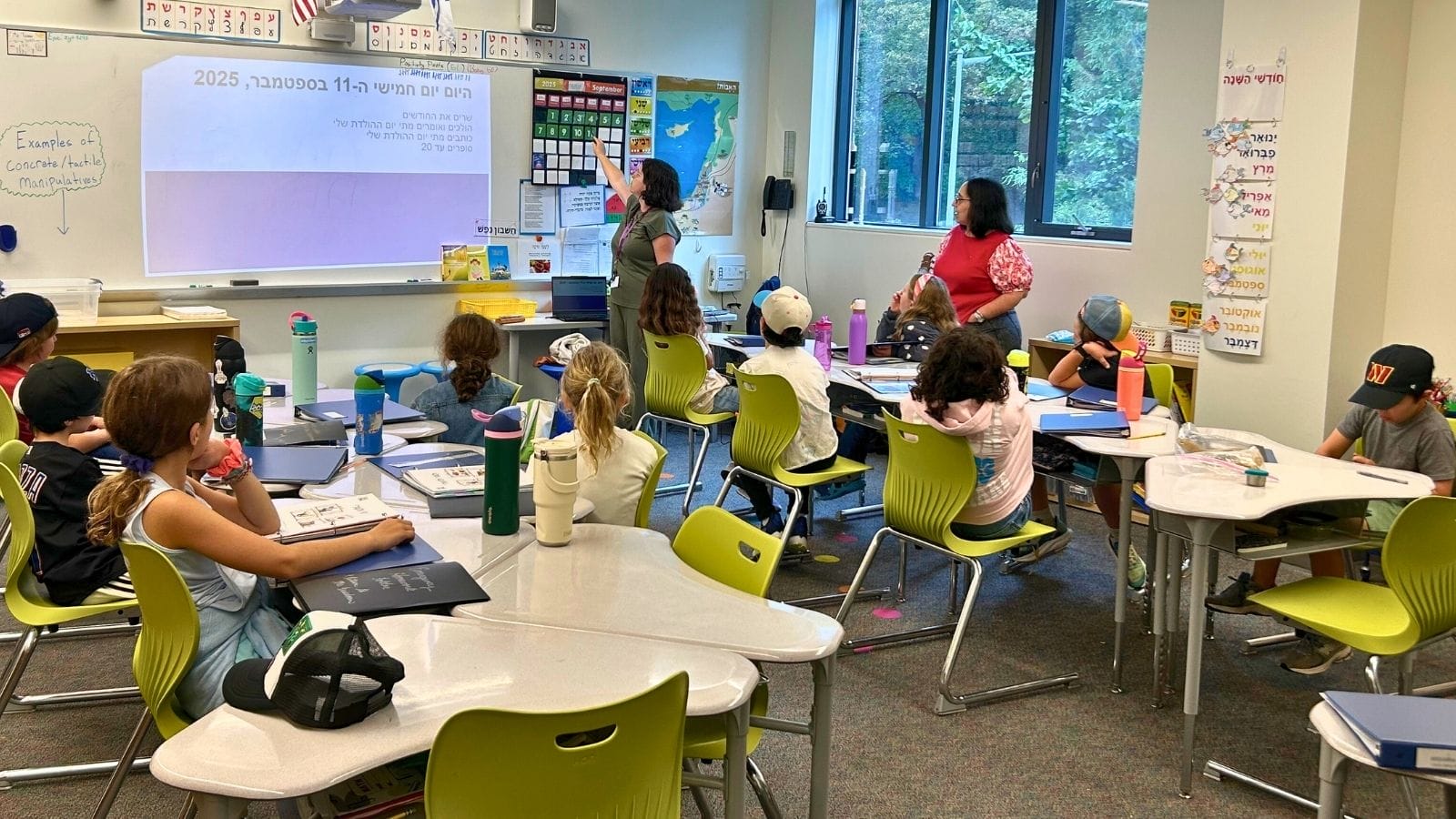
Ya’ara Robinzon and Laura Gazit in their classroom at Milton Gottesman Jewish Day School in Washington, DC.
A few weeks ago, Aleta and I attended a convening where leaders of education and philanthropic organizations were discussing what schools need to look like and do to prepare young people for an uncertain future. While lofty dreams were tossed about and multi-million dollar facilities were discussed, the biggest conclusion that everyone reiterated in one way or another was that schools must become more relevant and relatable to the lives of their students, and to make that happen, the kids within those schools must be known.
Since the 25-26 school year began, this is precisely the message our Teaching with Improvisation Fellows have been communicating to us, both through their work with students and their work with each other. As we slide into the mid-point in the school year, we wanted to share just 7 of the many lessons we’ve gleaned from our classroom visits this fall–more than 30 of them–at public, charter, and independent schools around Washington, DC.
- An emotional vocabulary helps us regulate. Practice talking about how you feel.
In an improvisation-based workshop series that Kena Alison (HS Science) and Chrys Seawood (MS English) led at Washington Latin Public Charter School, they made a powerful observation: Sometimes when our students get upset, and the frustration escalates, it’s because they don’t have the vocabulary to explain how they feel. Focusing on building that vocabulary gives them the tools to be understood. - Labels can hinder our potential. Approach each other with a beginner’s mind.
When Amy Wensel (Kindergarten), a teacher at Rappahannock County Elementary School, is given her class list, she purposefully tries to avoid conversations with colleagues about the “problem students.” She wants to learn who her children are and see what’s possible without the labels. Observing her during regular visits to the rural school district over the past four months has shown the beauty of that approach. Every child is known, and colleagues cannot believe how much they’ve ALL grown. - It was never about the classroom decorations. It’s all about the classroom connections.
The first time we visited Andrea Durio (ELL) at Dunbar High School, she introduced us to her “classroom,” a rolling cart that must carry everything she uses to teach all day. She has no classroom of her own to decorate, but when you watch her teach, you realize how superfluous the “stuff” of teaching can be. She shifts between Spanish and English to meet each student’s needs. She can tell you about all of their lives. And she creates community through human connection, which is evident in the conversations that follow her down the hall, in the doorways, and within the walls of wherever she happens to be. - With help, we can grow in unexpected places. Be that help for others.
Marco Moreno (HS Social Studies) and Kim Kelley (HS English and Math) teach at Goodwill Excel Academy, an alternative high school for adult learners. Three years ago, when they first took the Teaching with Improvisationour Summer Institute, they got an Inspired Teaching plant. One problem: their classrooms have no natural light. But they wanted the plant to grow, so they found little grow lights to perch in the pot. The plant is thriving thanks to this problem-solving,: a lovely metaphor for the kind of personalized teaching approaches they both bring to each student in their classes. - We build community when we get on the same level. Find ways to meet people where they are.
When we visited Sabrina Burroughs (Kindergarten) at John Lewis Elementary this fall, she had just injured her knee and was wearing an immobilizing brace. This made it difficult for her to move about the room with her young students the way she usually does, but she did not let this stop her from trying. In her classroom, there’s little division between the teacher and the student when it comes to learning – she likes to be on the same level, to make eye contact not from above, but face to face. So when it came to circle time, she had a beautiful solution. She and her students all lay on their bellies to discuss the book they were reading. - We all need to play to learn. Look for new ways to add joy to what you’ve always done.
Asia Dabney (preK-K) teaches at Lee Montessori, and Montessori education is filled with materials and activities that are designed to be used in particular ways for particular purposes. But in a recent workshop for her colleagues, Asia asked them to think of additional ways to use these same tools that would create more joy and play. Her peers were buzzing with excitement as they rethought and shared new versions of approaches they’d been using for years. - It’s always a good time to sing. Lift your voice, and others will follow. It was a true delight to visit the classrooms of Laura Gazit and Ya’ara Robinzon, Hebrew teachers at Milton Gottesman Jewish Day School, and Emily Hall, an SEL teacher at The Langley School, and see them singing with their elementary and high school students. They had to do the scary thing of leading a song in a class that isn’t about singing. But when they did, Laura and Ya’ara’s students got into the fun of belting out the months in Hebrew, and Emily’s students got to practice sharing “something good” that had happened in their lives.
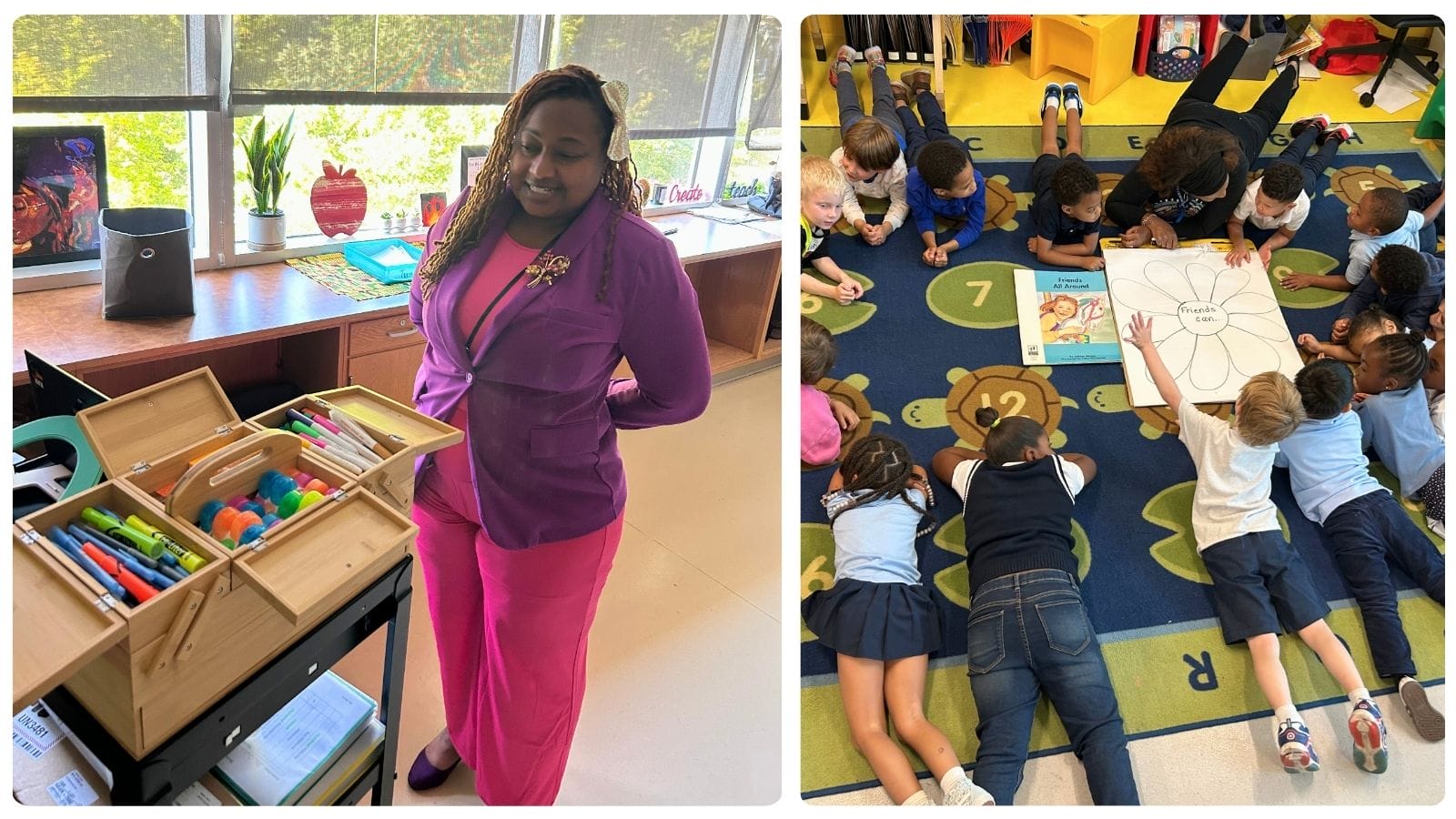
(L) Andrea Durio posing with her mobile classroom at Dunbar High School and (R) Sabrina Burroughs meeting her students on the floor at John Lewis Elementary School, both in Washington, DC.
It’s worth noting that these lessons from our teachers can apply as much in our homes and communities as they do in our schools. We can’t put all the onus for change solely on the shoulders of teachers. As the calendar changes and you consider resolutions for the new year, maybe see what happens if you adopt just one of these ideas as a practice. Small changes can be revolutionary. Especially when they pertain to how we care for and come to know each other.
For weekly professional learning resources on topics that matter to students, educators, and families, subscribe to Hooray For Monday.
Hooray For Monday is an award-winning weekly publication of Center for Inspired Teaching, a social change nonprofit organization that champions the power of curiosity and is dedicated to transforming the school experience from compliance-based to engagement-based. Inspired Teaching provides transformative, improvisation-based professional learning for teachers that is 100% engaging – intellectually, emotionally, and physically.
