

January 5, 2026
By Aleta Margolis, Founder and President
Listen to the Hooray For Monday podcast for the audio version of this issue.
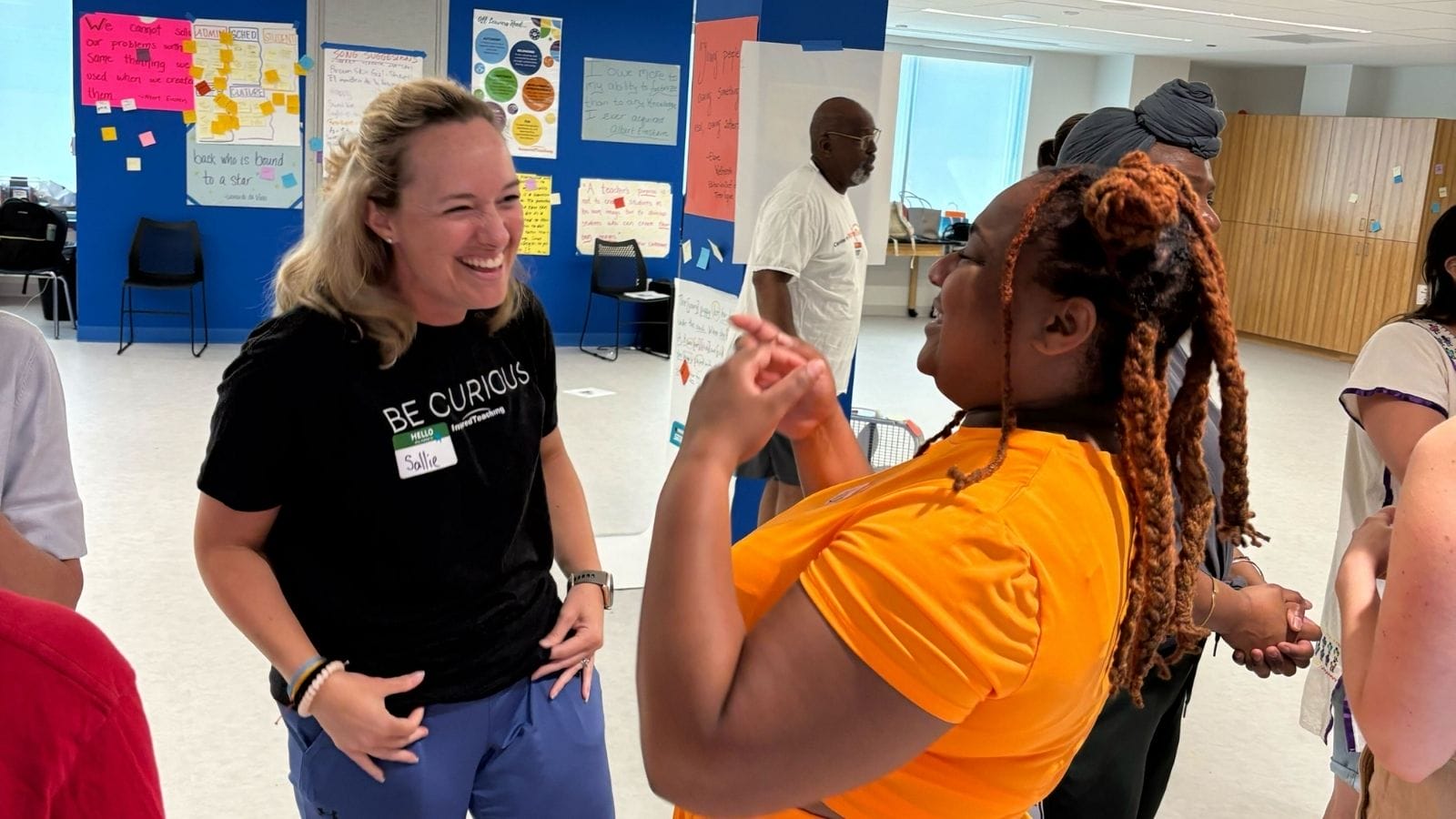
Inspired Teaching Fellows spend a week exploring their aspirations and contributions through the 5 Rules of Inspired Teaching Improv at the Teaching with Improvisation Summer Institute each June.
According to Newsweek, the top 5 New Year’s resolutions for 2026 are: exercising more; being happier; eating healthy; saving more money; and improving physical health.
These resolutions make sense. They focus on things we know we’re supposed to do in order to take care of ourselves. But I’m particularly intrigued by the second one, being happier. How do you do that? How do you make being happier actionable? How do we do happy?
One way to strengthen happiness and well-being is to engage in useful and purposeful work. We can also train our minds to identify strengths in ourselves and others, even as we navigate the challenges in our lives.
With this in mind, here’s an offer: What if, in addition to making resolutions, we start this new year by thinking about our aspirations and contributions?
I’ve written before about aspirations and contributions. It’s a concept coined by social entrepreneur Trabian Shorters (whom I interviewed in a 2023 episode of Hooray for Monday).

Trabian Shorters, social entrepreneur who coined “asset framing.”
Simply put, asset framing means teaching your brain to look for, and find, strengths first. Then you can focus on areas that need shoring up.
Here are two concrete ways to engage in asset framing – try these activities on your own first, and then with your colleagues/students:
Operating Instructions – an activity in which your students (and you!) investigate the ways your brain works, and build from there!
Say Yet – a quick activity that transforms “I can’t!” into “I am still learning, and I will figure it out!”
Begin this process of asset framing with yourself. Then, turn the process outward. School leaders: look for the aspirations and contributions of your teachers. Teachers: look for your students’ aspirations and contributions. And invite them to look for their own strengths.
I recognize that it can feel like an extra burden to spend time looking for students’ aspirations and contributions, especially when so many educators are expected to spend our time identifying, tracking, and addressing students’ weaknesses.
But, think about it this way: If you are teaching in a traditional school, you have about 600 hours with your students between now and the end of the school year. That’s a lot of time. Sure, fix problems when you need to fix problems. But if you start with the aspirations and contributions, you will surely encounter more tools for addressing problems, and perhaps even discover there are fewer problems, and more strengths, than you’d seen before.
And you’ll be taking action. You won’t just be hoping to be happy. You’ll be taking action. You’ll be doing happy.
Wishing you a truly happy New Year.
Hooray For Monday is an award-winning weekly publication of Center for Inspired Teaching, a social change nonprofit organization that champions the power of curiosity and is dedicated to transforming the school experience from compliance-based to engagement-based. Inspired Teaching provides transformative, improvisation-based professional learning for teachers that is 100% engaging – intellectually, emotionally, and physically.
