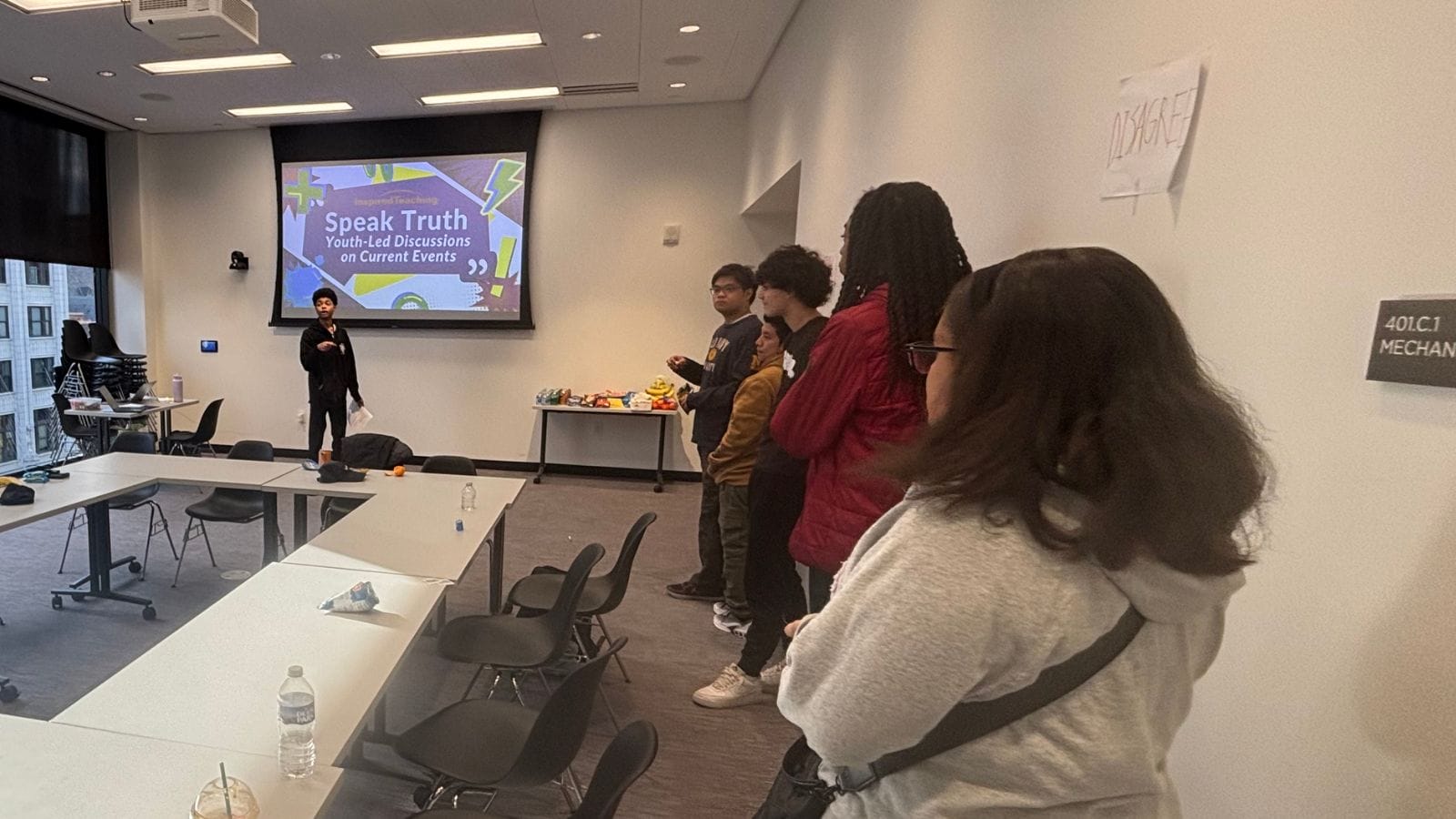
This November 2025 session was led by a 9th grade and 11th grader at Banneker High School in Washington, DC.

The discussion flowed from watching a clip of a video that offered historical context for “the first Thanksgiving,” which was a complicated mix of “Pilgrims and Native Americans ate together” with a bigger picture explanation of the diseases Europeans brought to the continent that wiped out tribes, as well as the desperation of the newcomers which created a reliance on the indigenous people for survival.
Students were not new to this telling of the story, and for the most part, saw the history of the first Thanksgiving as pretty distant from the food and family-centered event they know now. But the discussion got particularly interesting when they talked about:
1. When children should learn “the real story” in school.
2. Whether school is where this lesson should be learned.
3. The relationship between consumerism and the holiday.
“The Real Story”
The students in attendance were all high schoolers, and they thought the story of famine and genocide (a word they used) that is part of the Thanksgiving tale would not be appropriate for very young kids. One student commented, “Making hand turkeys when kids are little is okay; it protects the innocence of children.”
Another said, “But it’s better to know things than to be lied to about it. As I got older and learned what the original Thanksgiving was really about, I felt like my teachers lied to me.”
Another said, “I think it’s possible to teach the truth to even very young children if you do it in an age-appropriate way.”
“Who Should Teach History?”
This inspired a new conversation about who is really responsible for teaching that history. Shouldn’t parents be responsible for filling in the gaps? Several students thought parents would not fill in the gaps—maybe because they didn’t know or didn’t want to tell their kids. And this raised a question about how students navigate learning different things at home and in school.
“If your parents taught you something different from what you were being taught in school, how would you find out what to believe?” asked one student.
“It’s the role of parents to teach morals and school to teach history,” replied another student.
“Yes, and if the Government is celebrating Thanksgiving as a national holiday, they should regulate how it is taught in school and make sure the real story is being taught,” another student offered.
But then the point was made that the teaching of history isn’t that simple. One student threw out a hypothetical question to show how complex this can be. “Who made America?” he asked.
“What do you mean by made?” others responded. “Do you mean who colonized America? Who made the Constitution?”
This line of questioning went back and forth for awhile, proving the point that language matters and the teaching of our past requires specificity and difficult decision-making when it comes to who, what, and how details are taught.
“Overconsumption”
The discussion closed with an exploration of the relationship between Thanksgiving and overconsumption. They talked about the excesses of “black Friday” and even the excesses of a giant meal that might not all get eaten. They thought about what this all means in a country where there are those who live with so little. “We should just focus on getting what we need and not going crazy.”
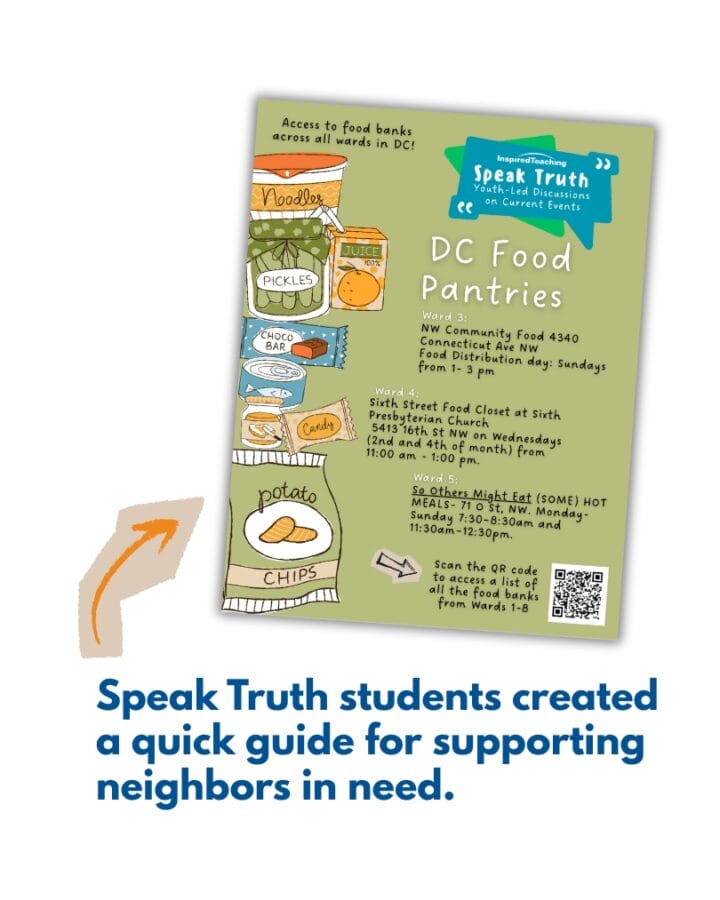
The group planning the discussion created a guide to local Food Banks and places to volunteer and help those in need.