

April 13, 2026
By Emily Hall, Inspired Teaching Fellow
Listen to this week’s Hooray For Monday podcast for Emily’s conversation with Meag Campos, project manager. Emily shares further insight into the heartfulness practice she brings into her classroom for her students and herself.
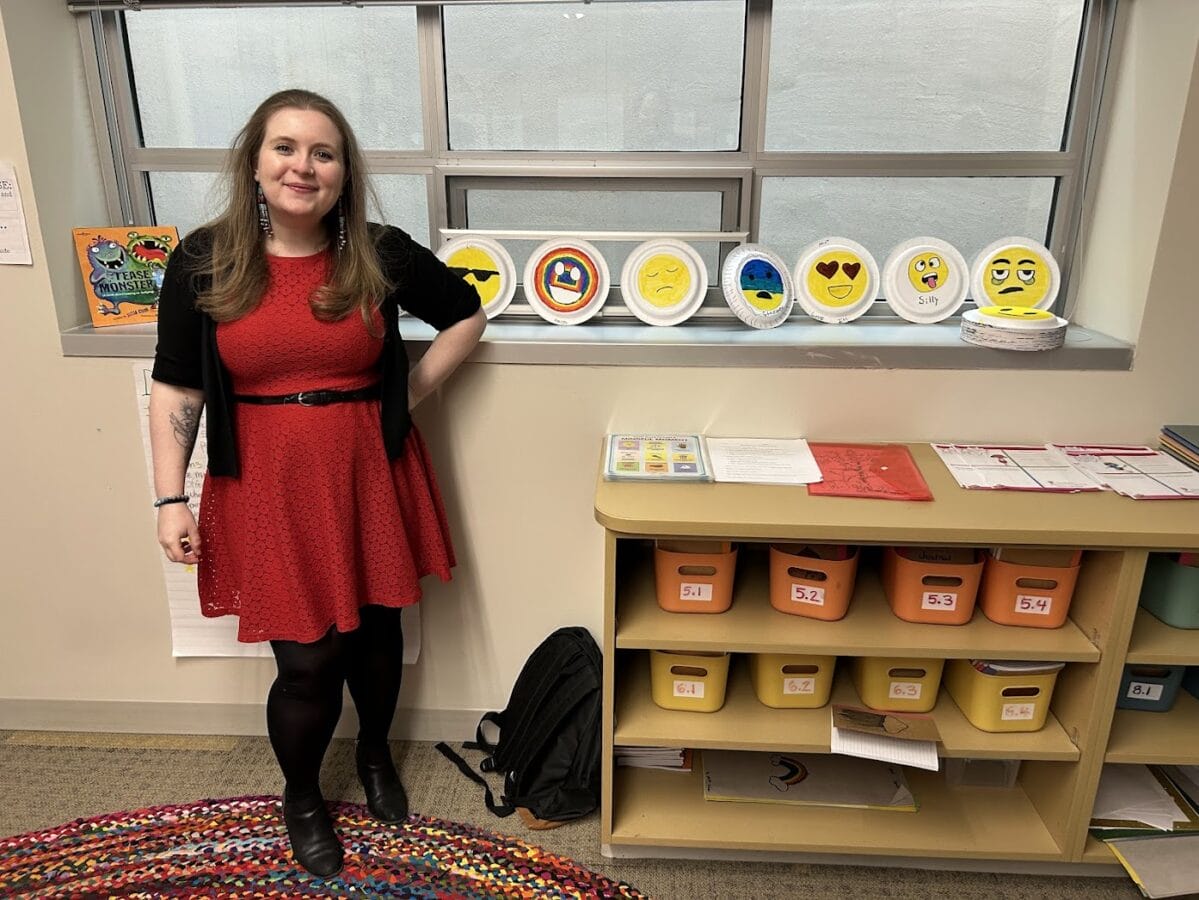
Emily Hall in her classroom at The Langley School in McLean, VA.
In education, we spend a lot of time in our heads. We analyze standards. Track data. Measure growth. Design lessons that sharpen thinking and strengthen skills. The education system rewards achievement, performance, and productivity. With unyielding to-do lists, packed schedules, and outcome-focused minds, it becomes easy to lose touch with the heart of our purpose.
Burnout is real.
In 2025, 91% of teachers reported experiencing burnout, with 75% describing it as serious or severe. Meanwhile, 75% of high school students report constant stress from schoolwork.
When our minds are chronically overworked, the brain’s negativity bias intensifies. The amygdala, the brain’s alarm system, signals potential threat. Cortisol and adrenaline rise. Heart rate increases. Muscles tense. Attention fogs.
Seemingly simple tasks can begin to feel overwhelming. And when teachers and students live in this state long enough, we can feel trapped in our heads — less able to regulate emotions, connect with others, or access creativity and perspective. Breaking this cycle takes courage and compassion.
What I’ve learned from my students this year is that navigating mental overload doesn’t begin in the mind; it starts with our hearts.
The Day the Clouds Turned into Tornadoes
In October, I was buzzing with excitement to begin a sixth-grade mindfulness unit. We had practiced five-finger breathing. Learned about stress response. Watched a short clip from Kung Fu Panda and discussed Master Oogway’s reminders about being present.
Now it was time to observe our thoughts. I dimmed the lights. Turned on soft music.
“Imagine your thoughts are clouds passing in the sky,” I guided. “For one minute, we’ll practice noticing them without judgment.”
For about fifteen seconds, they tried. Then came the giggles. Then the fidgeting. A few eyes wandering. And then one student blurted out: “Tornado clouds!”
The class burst into laughter.
After class, I kept thinking about that comment. He wasn’t wrong. For many of us — adults included — our thoughts don’t float calmly across the sky. They swirl and spin. So, I asked myself: What would meet the students where they are? If our minds are too turbulent and full, could we start with the heart?

Master Oogway, a character in the animated film Kung Fu Panda.
I invited students to sit comfortably and place one hand over their hearts. We took one slow breath together.
“First, think of someone in your life — a friend, family member, teacher, anyone — who might need encouragement or kindness right now. You don’t have to say their name out loud. Just picture them.”
When they were ready, we slowly sang:
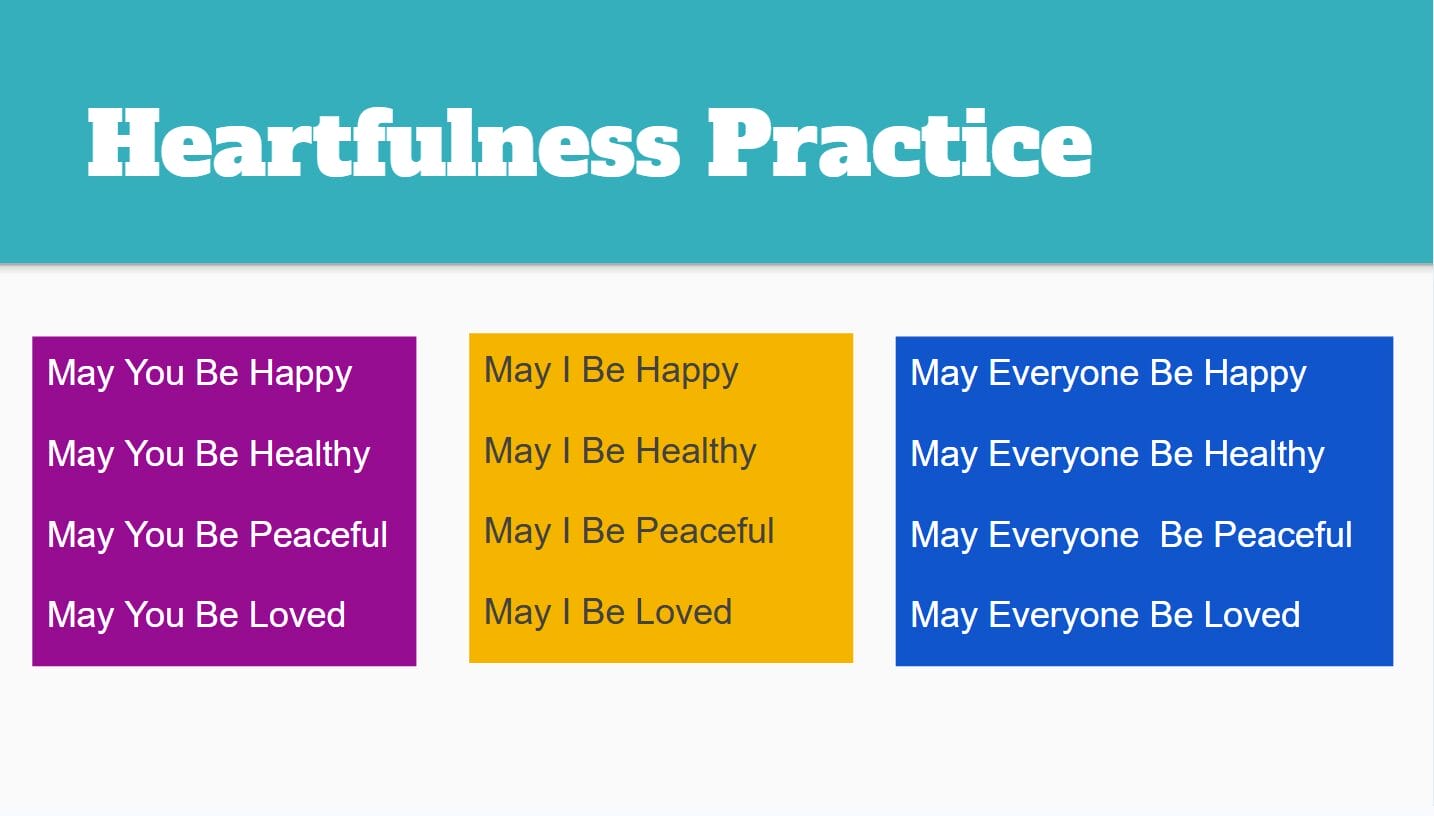
May you be happy.
May you be healthy.
May you be peaceful.
May you be loved.
Then we turned the words inward. “Now picture yourself smiling. Offer the same wishes to yourself.”
May I be happy.
May I be healthy.
May I be peaceful.
May I be loved.
Finally, we widened our perspective. “Think about our whole class. Our school. Our community. The world.”
May everyone be happy.
May everyone be healthy.
May everyone be peaceful.
May everyone be loved.
The room felt different this time — there was reverence. Instead of rushing to pack up and leave, I noticed students exchanging quiet hugs.The next week, as students came through the door, several asked, “Are we doing heartfulness today?”
I only see them once a week. But they remembered. That’s when it clicked: When the mind feels like a tornado, the heart can become an anchor. Even brief moments of anchoring can stay with students long after the lights turn back on.
Why Heartfulness Matters
The heart is not merely symbolic. It has its own intrinsic nervous system and communicates continuously with the brain, shaping attention, emotion, and decision-making. Research from the HeartMath Institute shows that cultivating emotions like appreciation and compassion helps the heart and brain move in synchrony — patterns linked to calm, clarity, and prosocial behavior.
The heart even produces the body’s largest measurable electromagnetic signal, detectable several feet away. The feelings we nurture in our hearts don’t stay inside us — they ripple outward, influencing our own nervous system and the energy of those around us. This is exactly what we see in our classroom during heartfulness: students pause, hearts open, and a calm, connected presence fills the room.
We are not just thinking beings. We are physiological, emotional, and relational beings.
Heartfulness is not an escape from reality. It is a practice of presence:
- regulating our nervous systems,
- strengthening connection,
- widening perspective.
The longest journey may be from head to heart—but when we walk it together with students, we remember that the heart is not separate from teaching. It is the reason we do it.
Heartfulness in Practice
For Students: Sending Heartful Thoughts
- Place your hand on the heart.
- Close your eyes or focus your gaze on a fixed object.
- Picture someone who may need care.
- Offer them a silent wish for peace or strength.
- Offer the same wish to yourself.
- Then extend it outward to your classroom, community and world.
For Teachers: Filling the Heart
At the end of the week, take a blank heart template and fill it with moments that made your heart full: a brave question, a shared laugh, an act of kindness, or a quiet moment of joy. Place it somewhere visible to reconnect to your why each Monday.
Hooray For Monday is an award-winning weekly publication of Center for Inspired Teaching, a social change nonprofit organization that champions the power of curiosity and is dedicated to transforming the school experience from compliance-based to engagement-based. Inspired Teaching provides transformative, improvisation-based professional learning for teachers that is 100% engaging – intellectually, emotionally, and physically.
