Elementary
A collection of lessons and activities from Inspired Teaching to foster authentically engaging learning with students and deepen teachers' understanding of their role in the classroom.
Whether you teach early childhood or calculus, these award-winning lessons and activities—informed by 30 years of work with thousands of educators—authentically engage, spark curiosity, build community, and support academic success in your classroom. The self-led teacher assessment tools challenge you to shift your role from deliverer of information to Instigator of Thought, providing small steps with big payoff for reinvigorating your practice and rediscovering your why.

Finding Pi
Understanding where the number pi comes from stokes curiosity about geometry and teaches students that math describes the world around us.
Building Sensory Awareness
All of our senses are working all the time and these activities heighten our awareness of that fact.
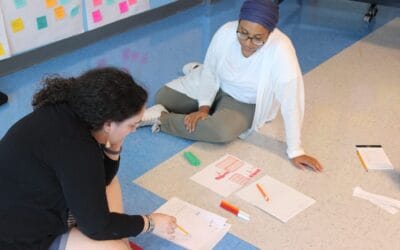
Finding the Zone of Proximal Development
This activity helps students to become aware of their zones of proximal development, those spaces that push them to stretch beyond what they already know and can do toward what might be possible.

Make Way for the Monarchs
Few lifecycles are as enticing to observe in their entirety as that of monarchs and watching the transformation from a caterpillar into a creature that can fly is a powerful metaphor for the kind of transformation one can do through learning.

Finding Smiles
Focused and specific feedback on how we positively relate to others is good for our self-esteem and encourages us to lean into our authentic selves.

Hands and Feet Stories
Learning to listen deeply may very well be one of the most important skills we can cultivate as members of a community and one of the ways we can demonstrate our understanding of what we hear is by sharing back what was said.

Seeing with Different Eyes
Using basic observation and listening skills, this activity can serve as a catalyst for building community in the classroom and deepening understanding of how each of your students thinks.

Yes. But… vs. Yes! And…
As teachers, embracing an improvisational mindset can help us think creatively about problems, and building this kind of thinking in our students can do the same for them. This activity is a good place to start.

Listening With Someone Else’s Ears
This activity invites students to step into the role of someone (or something!) else, imagine what they would say, and listen to what those around that person are saying too.

Zoom Out
Considering the size of our problems in the relation to a bigger context can help us understand the nature of the issue better, and sometimes even make the problem seem less huge.

Seven Bikes
This activity combines observation and inquiry as learners exercise their imaginations to find multiple answers to the same question.

Automatic Writing
One way to stimulate our imaginations is to relax and let our minds flow uninterrupted. Automatic writing gives our minds the space to do just that.