

July 6, 2026 By Jenna Fournel, Chief Curiosity Officer
Listen to a reprise of our April 25, 2025 Hooray For Monday podcast for the conversation between Jenna, Meag, and Sheena Styles, an elementary math teacher in Washington, DC, and Inspired Teaching Fellow. Ms. Styles shares her advice for creating a classroom where students feel empowered to take the lead in their learning.
We have arrived in July, and here in Washington, DC, the heat and humidity are reminding us that summer invites a pause. After an incredible Teaching with Improvisation Institute at the end of June, we are using this month to plan for the fall and reflect on things we have learned from our past Fellows that continue to inspire the work we do moving forward. For the next 4 weeks, we’re sharing posts from the archives that feature some of these Fellows and their wise words.
When I explored today’s post from the archives that first ran back in April of 2025, I was reminded that 24-25 Fellow Sheena Styles offered us advice that applies as much in the classroom as it does to life beyond school. In fact, some of the key takeaways from our conversation with her invite questions that I’m eager to explore in my own life this month as I interact with friends and family at summer events and work closely with my colleagues to design the professional learning that begins in August. Here are 4 questions inspired by this piece that I offer to you.
- How can I be fearlessly curious in the second half of this year?
- What does respectful disagreement look like in my interactions with others?
- How can I make friends with my mistakes?
- What can I do to both accept and celebrate my human-ness and that of those I care for?
Treat yourself to a full read/listen; I’m confident it will inspire many more thought-provoking questions for you!
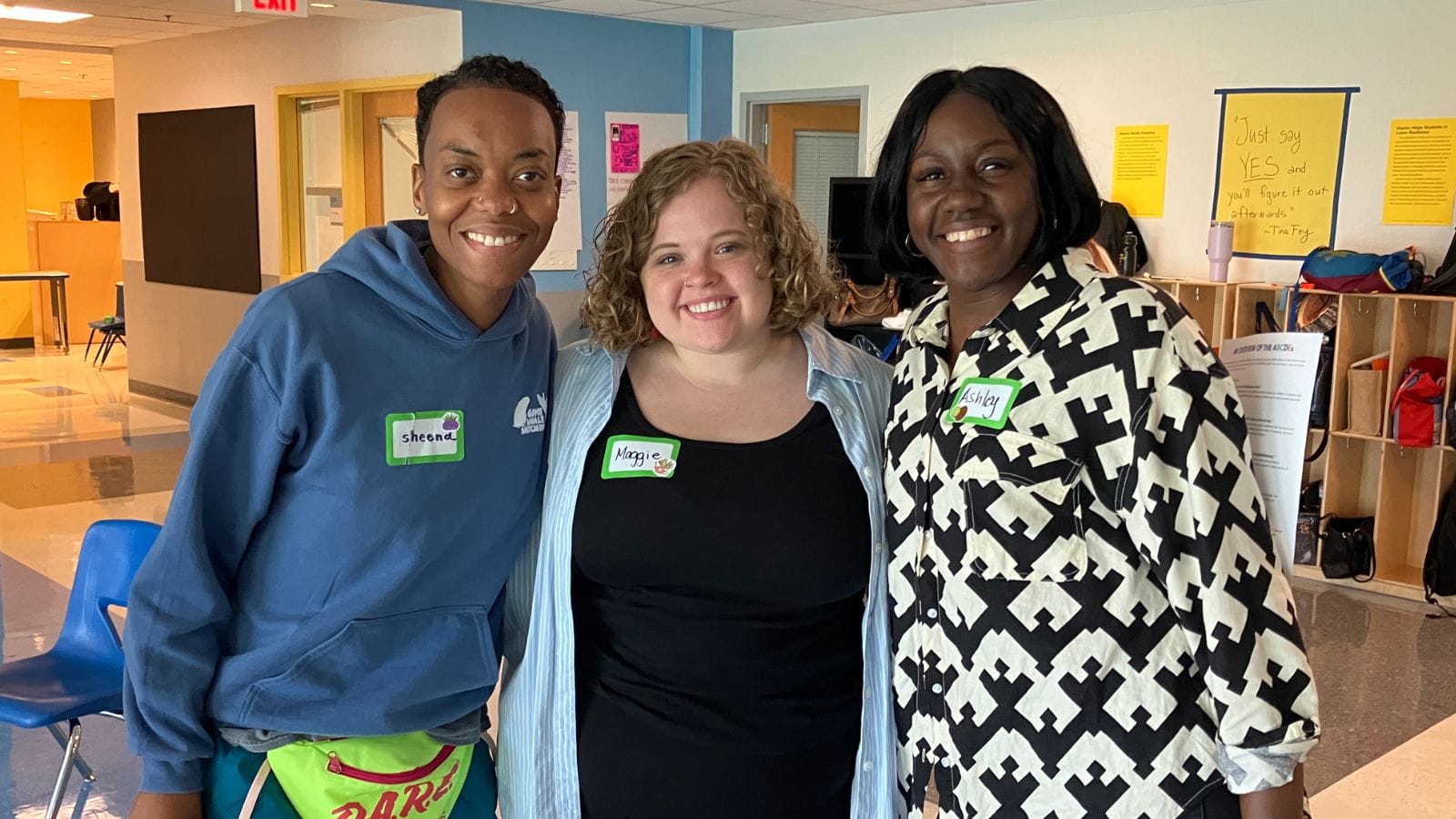
Inspired Teaching’s April 2025 online Institute, “Making Constructive Choices,” offered participants an array of Inspired Teaching strategies and tools to support students in taking ownership of their learning. It also featured guest speaker, Sheena Styles, a Teaching with Improvisation Fellow and 3rd grade math teacher at Takoma Elementary in Washington, DC.
In my visits to her classroom throughout this school year, Ms. Styles and her young students have exemplified a classroom culture that centers Mutual Respect and student voice. In my and Meag’s conversation with her during the Institute, she shared how she cultivates this environment.
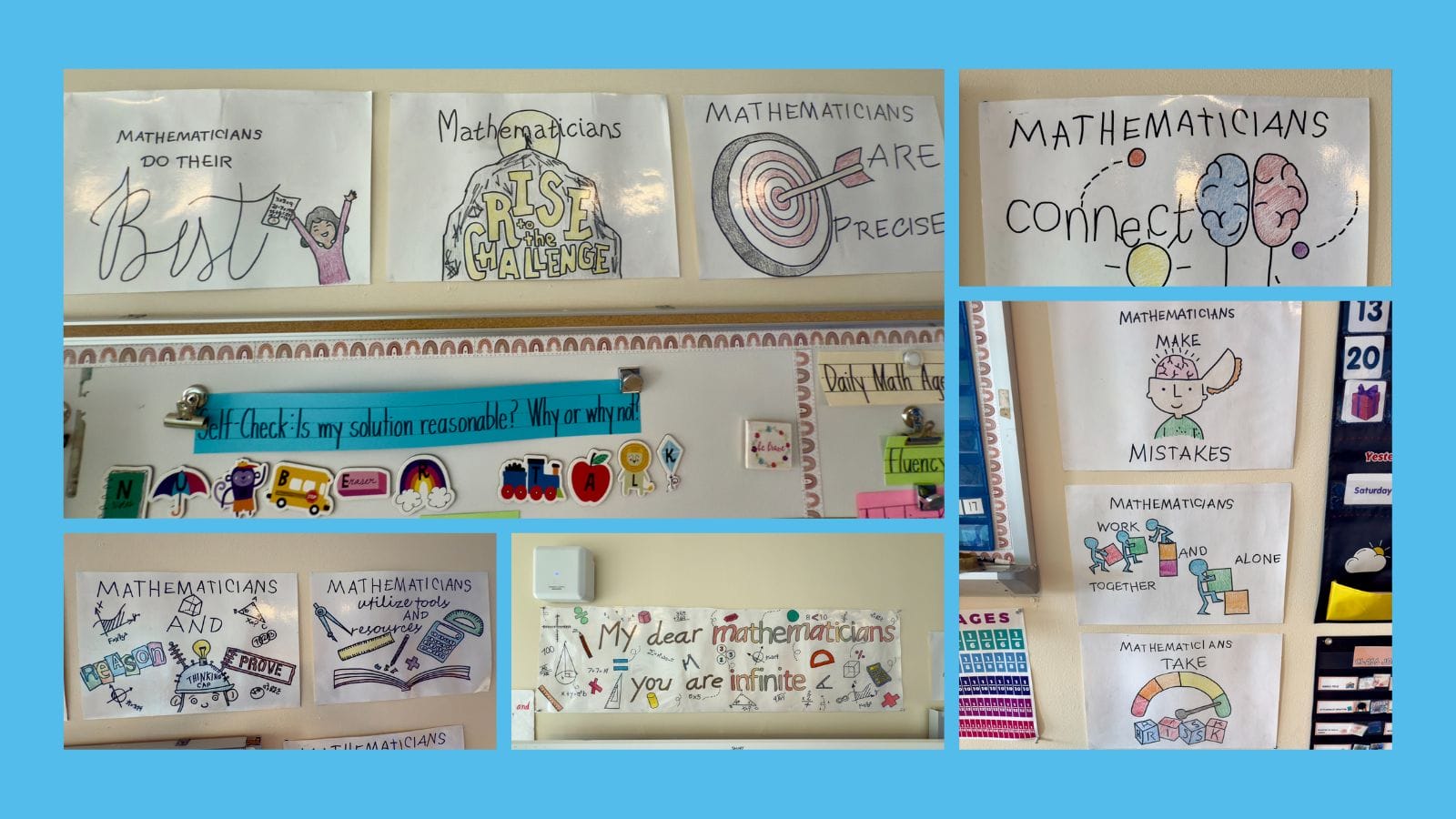
Here are 4 takeaways from Ms. Styles for building a classroom where students are empowered to take the lead:
Fearless Curiosity
Upon entering Ms. Styles’ classroom, it is evident that curiosity and open-mindedness are highly valued. From the posters on the wall to the language Ms. Styles uses when teaching, she models joyful curiosity for her young learners, letting them know asking questions–and not knowing the answers–is part of the process.
“I consider myself a lifelong learner…and kids are like the ambassadors of curiosity; they are fearlessly curious. And so I’m feeding off of that energy,” she says. “I tell [my students] I don’t know everything. I’m a teacher [and] I’m a student, just like you guys are. You’re my teachers as well.”
Respectful Disagreement
When students arrive at a solution, whether to a math problem or a social one, that may not be correct, Ms. Styles frames her critiques–and encourages her students to do the same–as respectful disagreement.
“When students share their solutions, they know how to say things to each other like: ‘Do you agree or respectfully disagree?’ ‘What strategy did you use?’ All of our discussions are guided by questions, so students get into the habit of asking as well as answering questions.”
Space to Stumble
Among the many posters in Ms. Styles’ room is one that reads “Mathematicians make mistakes.” And that is a lesson she is sure to emphasize with her students, especially as math is often a subject framed as difficult or accessible only to those with an inherent aptitude.
“What really wills us and awakens us to our own ability and starts to build our confidence, is our ability to stumble and get up. And if I’m a teacher and I love them, I have to give my students the space to stumble and to get back up. They get back up…and now they can name the mistake: ‘Oh I said 9 plus 1 is 11 instead of 10.’ And so, it becomes this thing where we’re just making friends with our mistakes because that’s a part of life. Mistakes are a part of life.”
Being Human
“I’m able to connect more meaningfully and deeply with my students, the more vulnerable I’m willing to be…I want to leave them with something every single day [so I close class with] ‘I’m proud of you. I’m grateful to be your teacher.’ And I really am grateful; I love the work that I do. It is an honor [and] I don’t take it for granted…So, that’s just a bit of positivity that I leave them with to end our day. And to add to that, that also includes me. Being a whole human in the same way that I need to embrace how my students show up. They talk about their feelings, like I talk about my feelings as well. So, we see each other as human beings with feelings and experiences.”
For additional insights, resources, and information on Inspired Teaching teacher and youth programming, subscribe to the Hooray For Monday newsletter!
Hooray For Monday is an award-winning weekly publication of Center for Inspired Teaching, a social change nonprofit organization that champions the power of curiosity and is dedicated to transforming the school experience from compliance-based to engagement-based. Inspired Teaching provides transformative, improvisation-based professional learning for teachers that is 100% engaging – intellectually, emotionally, and physically.
